



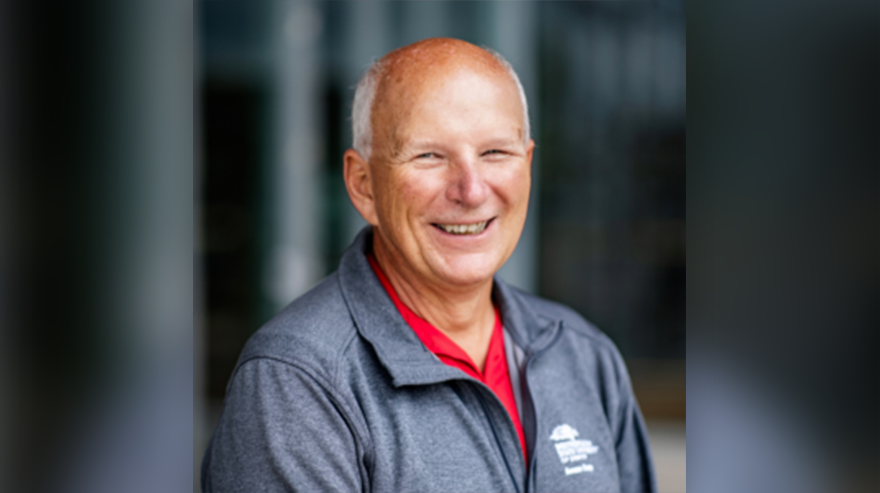
After more than 20 years of championing accessibility and student success, Greg Sullivan, director of the Access Center at Metropolitan State University of Denver, has announced his retirement, effective in June.
Student Engagement and Well-being will conduct a national search for his successor, closing out a career defined by innovation, advocacy and deep commitment to students.
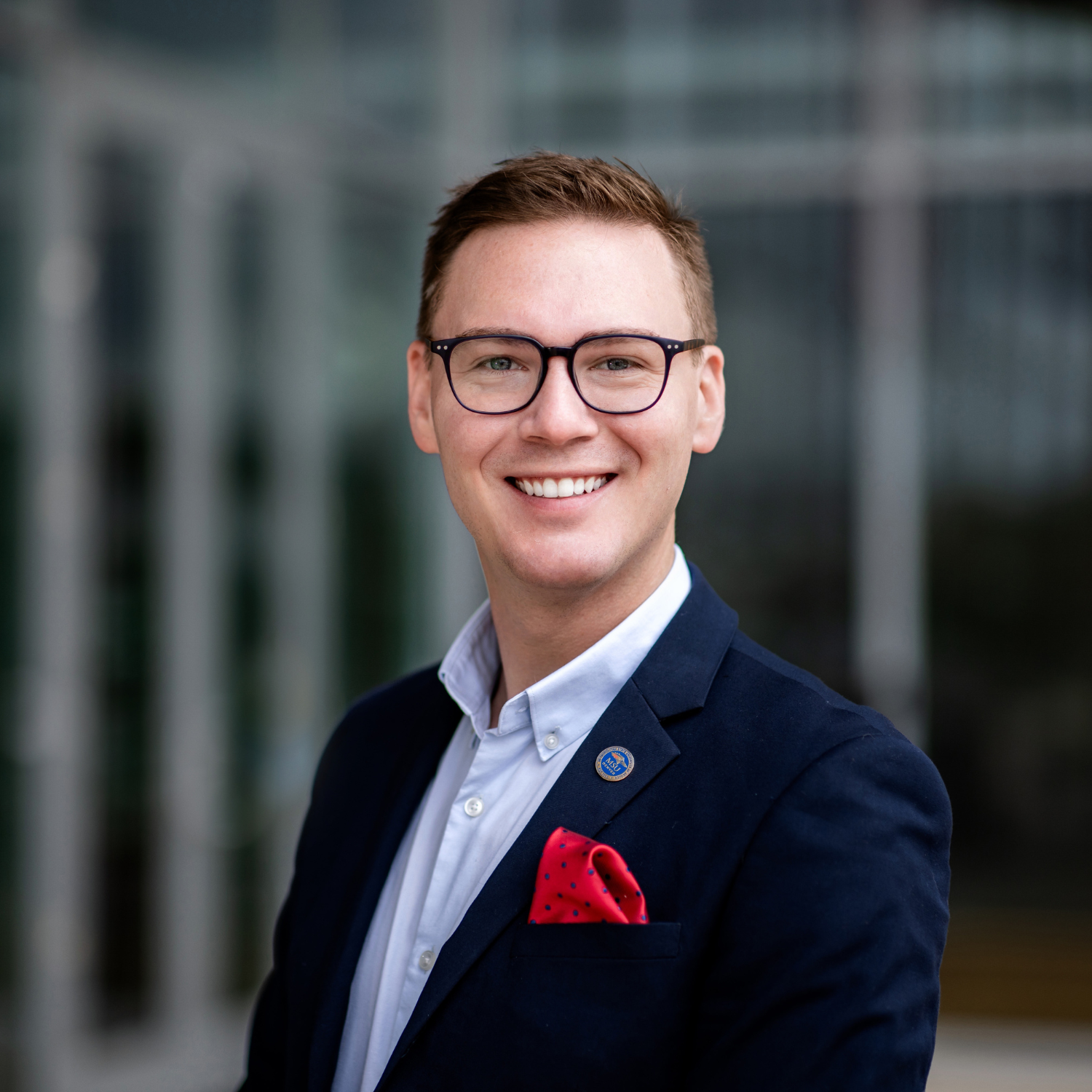
“Greg’s time at MSU Denver has left an enduring mark on this institution and, more importantly, on the lives of our faculty, staff and students,” said Taylor Tackett, associate vice president for Student Engagement and Well-being and dean of students. “His work didn’t just build stronger systems, it helped shape a culture of inclusion and accessibility that will continue long after his retirement. Greg has also reminded all of us that how we show up for one another matters just as much as the work itself. We are profoundly grateful for his service and the legacy he leaves behind.”
Since joining the University in 2003, Sullivan has helped transform how MSU Denver supports students with disabilities, building programs that not only meet needs but anticipate them. He began working on the Auraria Campus in 1999 as a disability coordinator for the Auraria Higher Education Center before stepping into the director role when MSU Denver established its own accommodations office.
Among Sullivan’s most influential contributions was the creation of the University’s first in-house training video on the Americans with Disabilities Act, equipping faculty and staff with tools to better support students. He also launched a Universal Design for Learning award program, spotlighting faculty who design courses that remove barriers through flexible, inclusive teaching practices.
Sullivan’s impact extended beyond campus through a partnership with Denver Public Schools that brought high school students with disabilities to campus for a weekly transition course. The program helped demystify college life. For many participants, MSU Denver became the next step in their education.
Reflecting on his career, Sullivan pointed to the people who shaped his experience.
“I have been proud to serve as director of the Access Center since 2003 and would like to thank everyone at the University that has supported me and our program over the years,” he said. “I would also like to recognize all the resilience and perseverance of the students our office has served and the lessons they have taught me about life.”
He also credited colleagues Rachel Quintana, assistant to the director, and Melissa Cermak, associate director, along with Tackett, for helping make the work impactful and deeply rewarding.
Sullivan plans to spend more time with his three grandchildren in northern Colorado, travel on long-anticipated trips to Italy, Sicily and Ireland with his wife of 44 years and finally dedicate time to refining his golf game.