



Key takeaways:
- With first-generation students making up 57% of undergraduates, their success is core to Metropolitan State University of Denver’s mission.
- Faculty and staff members are especially vital to helping first-generation students thrive by making college expectations clearer and connections easier to build.
- The First-Gen Connection Faculty Learning Community kicks off Sept. 9 with practical strategies for teaching and supporting first-generation students.
At MSU Denver, 57% of undergraduates are first-generation college students, meaning their parents or legal guardians did not earn a bachelor’s degree in the United States.
That makes understanding the first-generation student experience essential to the University’s work.
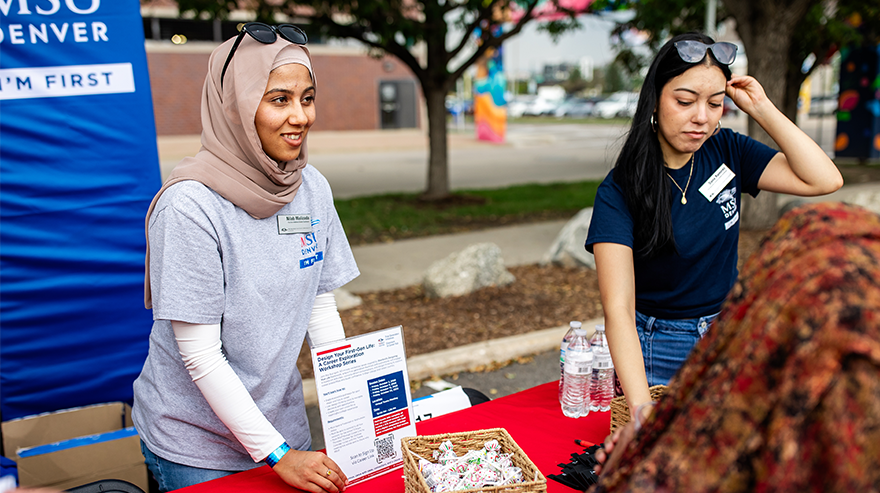
“Our first-generation students bring so much of their own experience and knowledge with them,” said Rosmina Garcia, associate director of First Generation Initiatives. “Faculty and staff connections are such an important part of helping students build relationships and discover opportunities on campus.”
With that support, first-generation students can thrive — and at MSU Denver, they do. Garcia said recent institutional data showed first-generation students had a higher retention rate than continuing-generation students and, in 2023-24, were completing their degrees in an average of 4.2 years, compared with 4.4 years for continuing-generation students.
Ready to support your first-generation students? Start with these 10 tips:
1. Share your story
When appropriate, share aspects of your educational background and identities. Seeing faculty and staff as relatable can help students build trust and connection.
2. Make warm referrals
A referral can be more effective when it comes with an introduction. Connect students directly with colleagues or campus resources rather than simply sending them elsewhere.
3. Explain the hidden curriculum
Don’t assume students know higher education terms, processes or expectations. Explain things such as how office hours work, how to communicate with professors and how to navigate academic and career systems.
4. Build in flexibility
Many first-generation students commute, work and balance family responsibilities. When possible, offer options for completing assignments, collaborating or engaging with course material.
5. Build confidence and belonging
First-generation students may experience isolation, self-doubt or feeling different from their peers. Learn students’ names, create opportunities for connection and acknowledge progress beyond grades.
6. Put resources where students can find them
Include information about services such as the Writing Center, Access Center, Immigrant Services Program and Counseling Center in your syllabus, course site or other communications.
7. Normalize academic support
Introduce tutoring, supplemental instruction and academic skills workshops as resources for all students, not as a last resort or indication that someone is struggling.
8. Explain your teaching choices
Briefly tell students how your assignments and teaching approaches are designed to help them learn. Transparency can make expectations easier to understand.
9. Rethink “office hours”
Consider calling them “student hours” or explicitly explaining that office hours are time set aside for students to ask questions, discuss coursework or talk about their academic and career goals.
10. Keep learning
Supporting first-generation students is ongoing work. Faculty and staff can deepen their understanding through conversation, resource sharing and professional learning opportunities.
MSU Denver’s The First-Gen Connection: Building Belonging and Success Faculty Learning Community offers a semester-long opportunity to do just that. This FLC explores topics, including the hidden curriculum and Community Cultural Wealth Model; includes a student panel; and provides space for faculty and staff to share ideas and resources.
The first session is in person Wednesday, Sept. 9.
Learn more and sign up: