



In Margarita Driscoll’s perfect world, period products would be offered free and without stigma alongside soap and toilet paper.
Until then, she’s making change bathroom by bathroom.
Over the past three years, Driscoll, education and outreach program manager at the Health Center at Auraria, has led an effort to bring free period products to Metropolitan State University of Denver students, staff and faculty — work that required grant writing, student organizing, data collection and persistent advocacy across the tri-institutional Auraria Campus.
The result: Students, staff and faculty now have free access to pads and tampons in women’s restrooms in the Tivoli Turnhalle, Confluence and the Jordan Student Success buildings.
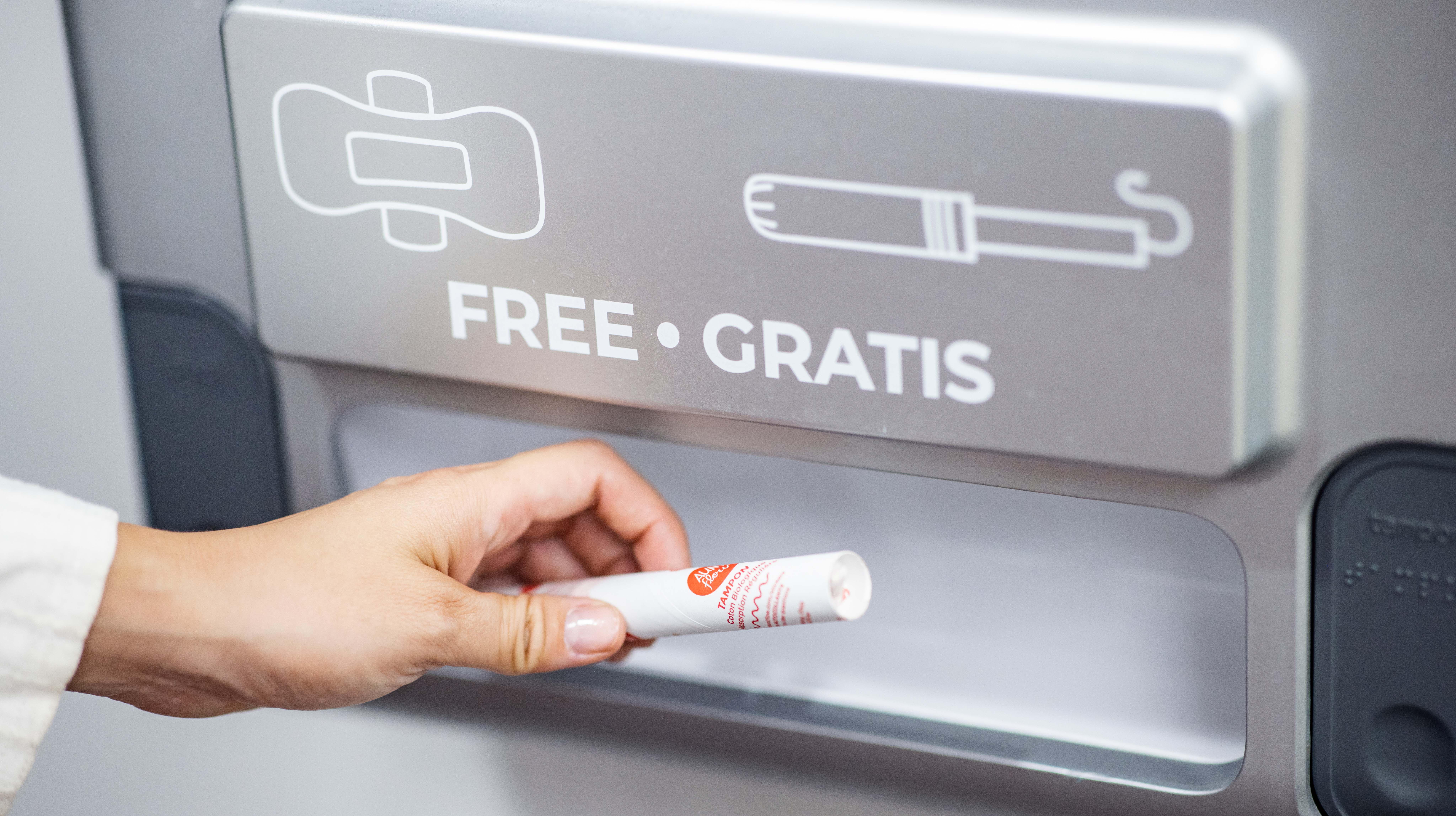
Margarita Driscoll retrieves a period product from a restroom dispenser on the Auraria Campus. Photo by Alyson McClaran
A hidden barrier to student success
For Driscoll, the initiative started with a request from MSU Denver’s Student Advisory Council member Gabriel Balnuena Trujillo to support the council’s effort to increase student access to period product.
The request aligned with the Health Center at Auraria’s position that basic needs are at the foundation of each person’s health and wellness, contributing to their ability to thrive.
“We can’t address student wellness without addressing basic needs,” she said. “Our students often balance classes, work, family, relationships and parenting. When basic needs like food, housing or period products are uncertain, those barriers directly impact students’ ability to learn and succeed. Not investing in those realities means we can’t fully support students where they are.”
At the same time, broader campus survey data pointed to widespread financial burden among students. So, Driscoll and campus partners decided to gather more specific information about period-product access.
The resulting Period Equity Survey collected responses from 1,471 campus members. The stories that came back were difficult to ignore.
Some respondents wrote that they had stayed home from classes because they could not afford products. Others said they had skipped meals to afford pads or tampons. Students who experience periods face additional financial burdens when compared with students who do not experience a period. This inequity needs to be addressed.
These findings aren’t unusual. Justice Necessary, a Colorado nonprofit conducted a survey in the state. They found that nearly all (90%) Colorado teen girls have experienced a period unexpectedly, and 80% of this sample had to miss class because of their period. The initiative also aligns with House Bill 1164, requiring all Colorado middle and high schools to stock restrooms with free pads and tampons by 2028.
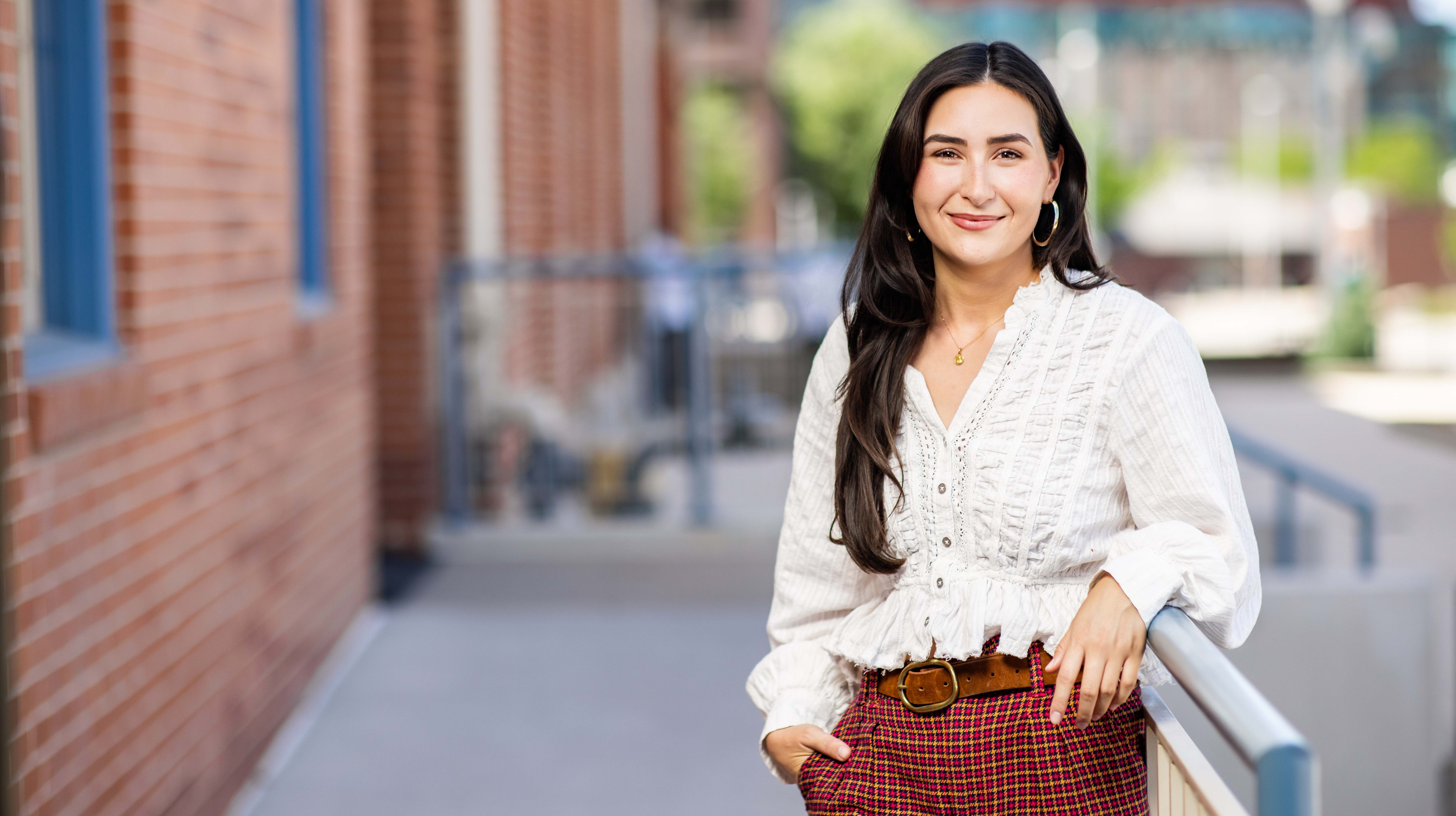
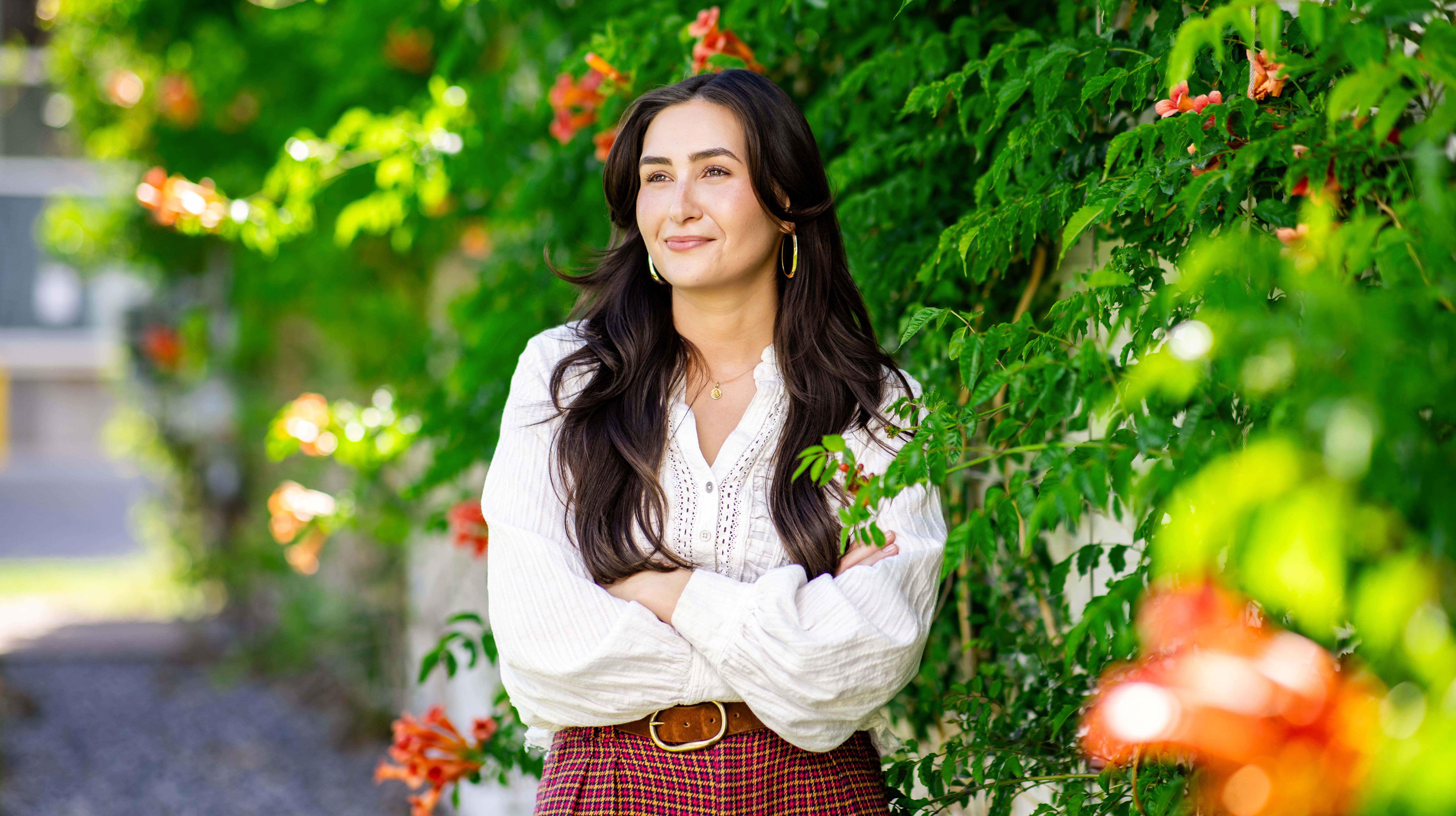
Margarita Driscoll, education and outreach program manager at the Health Center at Auraria, helped lead the effort to bring free period products to campus restrooms, increasing access for students, staff and faculty. Photo by Alyson McClaran
Turning research into resources
To launch the project, Driscoll secured an initial $5,000 grant, then worked with student governments and the Student Advisory Committee to the Auraria Board to continue funding and operations while looking for more sustainable sources. She coordinated with campus stakeholders, advocated for resources and navigated logistical hurdles to get the dispensers installed.
Students are central to the effort, circulating surveys via outreach and tabling, representing efforts in student government and Student Advisory Committee to the Auraria Board spaces, providing feedback, and advocating for broader access and additional funding.
“It would not be possible without students,” Driscoll said. “Having student voices involved has been critical from the beginning.”
The dispensers were selected carefully. They are ADA-accessible, have Braille labeling, hold enough products to simplify restocking for custodial staff, and are already being used in CU Denver-specific buildings.
Driscoll also worked with the LGBTQ campus advocates to make the initiative more inclusive. While the first phase focused on high-traffic women’s restrooms, she hopes future expansion will include more gender-inclusive restrooms across campus.
“Periods are already hard enough,” she said. “Students should never have to leave class, miss work or go hungry because of a basic need not being met.”
Public health with a personal mission
Driscoll’s commitment to public health was shaped long before she arrived at MSU Denver. When she was 19, her father died of pancreatic cancer — an experience she said changed the direction of her life and career.
“It gave me a deep sense of purpose,” she said. “I wanted to work in prevention and healthcare but also address the bigger systems that affect people’s health and well-being.”
Before joining the University, Driscoll worked at the University of Oklahoma and Hunger Free Oklahoma, on programs focused on increasing education and access to healthy foods in rural communities to address higher rates of heart disease. In each role, she has focused on pairing education with practical support.
Being a Roadrunner has been a natural fit for Driscoll, whose approach to public health centers on meeting students where they are and removing barriers that stand in the way of their success.
“Magi inspires our entire team to show up and do our best,” said Health Education and Outreach Assistant Decoyia Patton. “She encourages us to move beyond our comfort zones and challenge ourselves and the systems we interact with daily. She truly cares about this community.”
Raised in Oklahoma by a mother who emigrated from Mexico, Driscoll said she found a welcoming community at MSU Denver.
“I feel a sense of belonging I have never experienced anywhere else, especially being raised Latina in Oklahoma,” she said. “Working here has given me an overwhelming feeling of joy. And the people here genuinely care. Everyone knows they’re on the same team to support students.”
Period equity by the numbers
Results from the Auraria Campus Period Equity Survey (2025-26), which collected 1,471 responses from campus community members:
- 91% agreed period products should be as freely available as toilet paper in campus restrooms
- 58% said they had struggled to purchase period products because of financial hardship
- 38% reported missing school or work because they lacked access to period products
- 69% reported wearing period products longer than recommended because they lacked access to supplies
- 41% said they had gone without products because they could not afford them