



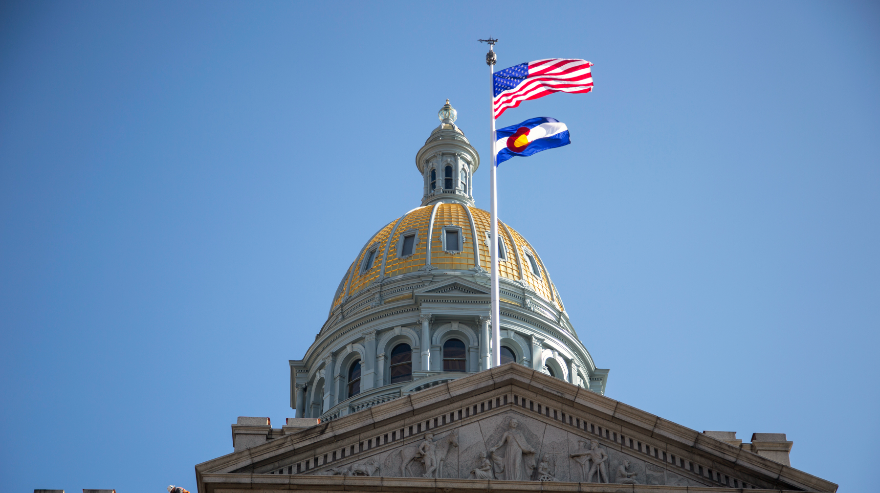
Colorado lawmakers entered this year’s legislative session facing a difficult budget environment, forcing tough decisions across nearly every sector of state government.
Higher education avoided deeper budget cuts, but challenges remain
Lawmakers held higher education base funding flat for the upcoming fiscal year in one of the most significant outcomes for Colorado’s public colleges and universities. Given the state’s broader budget pressures, simply avoiding additional cuts was viewed by many higher education leaders as a major win.
The decision also reinforced that lawmakers continue to view higher education as a statewide priority, even during financially constrained years. Maintaining stable funding helps institutions preserve academic programs, student support services and workforce development initiatives that are increasingly tied to Colorado’s economic needs.
Still, flat funding does not fully address the financial realities facing institutions such as MSU Denver. Rising costs tied to employee compensation, technology, operations and student support continue to outpace state appropriations. While the Legislature avoided reducing funding, institutions will still need to navigate financial pressures in the years ahead.
Colorado’s new funding formula better reflects MSU Denver students
Lawmakers also approved a new higher education funding formula designed to more accurately reflect the experiences and outcomes of today’s college students — particularly those who attend part time or follow nontraditional paths to graduation.
For MSU Denver, the changes are especially meaningful.
Historically, funding models have often favored traditional, full-time residential students, despite the reality that many MSU Denver students balance coursework alongside jobs, caregiving responsibilities and other life obligations. The updated formula begins to address that disconnect by including part-time students in retention reporting and adjusting how student success metrics are measured.
Even so, advocates say more work remains. Many higher education leaders continue pushing for adjustments that more fully capture the nonlinear pathways students take to complete degrees and credentials.
A new department could reshape higher education and workforce development
Another major development from the session was legislation creating a pathway toward a unified Department of Higher Education and Workforce.
The goal is to better align Colorado’s educational systems with workforce demands by coordinating higher education, workforce training and economic development priorities more closely under a single statewide department.
Supporters say the effort could help Colorado respond more strategically to workforce shortages while strengthening connections between education and employment opportunities across industries.
For institutions such as MSU Denver — where career readiness, workforce partnerships and applied learning are central to the University’s mission — the shift could create new opportunities for collaboration and alignment with state workforce priorities.
The actual department is not expected to be established until at least summer 2028, meaning many details about governance, implementation and institutional impacts are still being developed.
Other legislative outcomes
Several additional bills affecting students and higher education also advanced this session:
- The Colorado Open Education Resources Program was extended for another five years, continuing support for zero-cost textbooks and course materials. Even though program funding was reduced by 75%, any appropriation to the program is a significant win given the extremely challenging budget cycle.
- National Guard members will now be able to attend designated Colorado institutions tuition-free, with costs shared between the state and participating institutions.
- New legislation creates partnerships between higher education and the Colorado Department of Personnel and Administration to strengthen career pathways into public service and state government careers.
- Lawmakers approved alternative background-check pathways for Colorado students without Social Security numbers so they can complete required training hours tied to degrees and professional licensure.
- Colorado also revised its 2024 artificial intelligence consumer protection law, replacing it with a new framework aimed at protecting consumers from potentially harmful AI-driven decisions.
- Lawmakers extended direct funding for the Auraria Higher Education Center (AHEC) through July 2027 to support shared-campus operations under service agreements with its three partner institutions.
What didn’t advance
Not every higher education proposal made it across the finish line this session.
- A bill that would have waived tuition for eligible dependents of veterans stalled because of budget concerns and the projected cost to the state and higher education institutions.
- The Teacher Recruitment Education and Preparation program, known as TREP, received limited transition funding after initially being eliminated from the budget altogether. The program will continue temporarily for high school seniors before eventually sunsetting once the transition funding is exhausted.